
Sarv Jagat Corporation | Air Compressor Pressure Drop & Pipe Sizing Guide
Undersized pipes, long pipelines, bends, fittings, and air leaks can contribute to pressure drop in compressed air systems. Learn how proper compressed air pipe sizing and pipeline design help maintain stable pressure, improve air delivery, and support efficient industrial operations.
| Read Time | 3 min read |
| Status | published |
| Tags | Sarv Jagat Corporation, Compressed Air Pressure Drop, Air Compressor Pressure Drop, Compressed Air Pipe Sizing, Industrial Air Compressor, Compressed Air Pipeline Design, Air Distribution System, Pressure Loss in Air Pipes, Air Compressor Piping, Compressed Air Flow, Air Compressor CFM, Industrial Compressed Air System, Air Compressor HP, Air Pipeline Friction Loss, Compressed Air Leakage, Industrial Pneumatic Systems, Air Compressor Efficiency, Industrial Air Pressure, Compressed Air System Optimization, Industrial Engineering, Ahmedabad Gujarat |
Project Gallery & MediaSupplied Machinery & Installations
Article Overview & Specifications
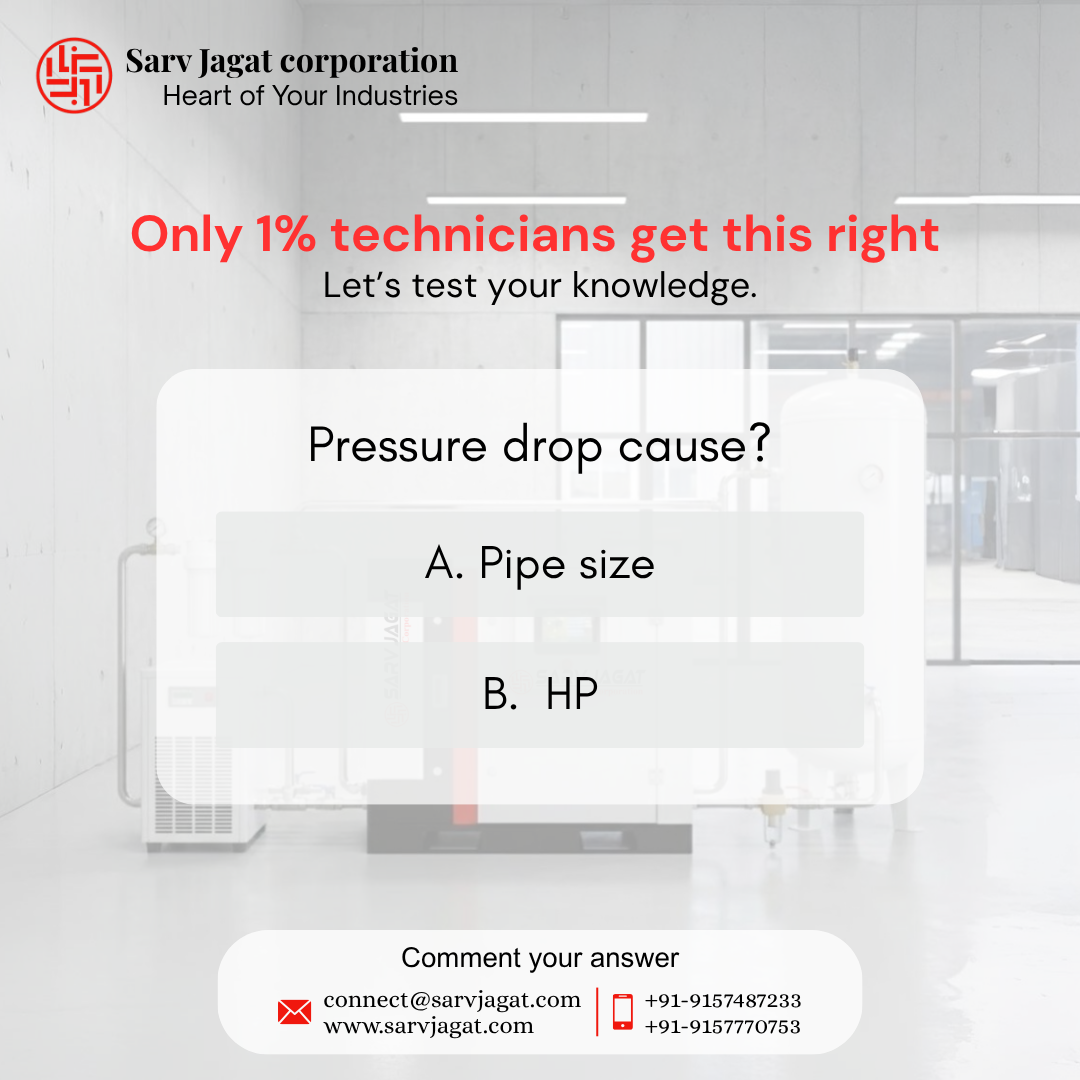
Only 1% of technicians get this right… 👇
Question: What causes pressure drop in a compressed air pipeline?
A. Pipe size
B. HP (motor power)
👉 Correct Answer: A. Pipe size ✅
Why? Let’s understand it simply.
Pressure drop is the reduction in air pressure as compressed air travels through pipes, fittings, valves, and other components in a compressed air distribution system. One important cause is resistance to airflow, which depends on pipe diameter, pipeline length, airflow demand, and the design of the distribution network.
What Causes Pressure Drop in a Compressed Air System?
• Smaller pipe diameter: Undersized pipes increase airflow velocity and friction losses, which can contribute to greater pressure drop.
• Long pipelines: The longer the compressed air has to travel, the greater the potential for friction-related pressure loss.
• Bends, joints, and fittings: Elbows, valves, connectors, and other restrictions add resistance to airflow.
• Air leaks: Leaks waste compressed air and can cause system pressure to fall when the compressor cannot keep up with demand.
• High air demand: When multiple machines consume compressed air simultaneously, an undersized distribution system may struggle to deliver the required airflow at the necessary pressure.
Does Compressor HP Cause Pressure Drop?
Motor horsepower (HP) does not directly determine pressure drop in the pipeline. HP indicates the motor's power rating, while the compressor's airflow capacity, operating pressure, and the design of the compressed air distribution system determine whether the required air can reach the equipment effectively.
Even a high-HP industrial air compressor may struggle to maintain the required pressure at a machine if the piping is undersized or poorly designed.
How Can You Reduce Pressure Drop?
✔ Select the correct compressed air pipe diameter based on airflow demand and pipeline length.
✔ Design the pipeline layout to minimize unnecessary bends and restrictions.
✔ Check joints, fittings, valves, and connections for leaks.
✔ Maintain air filters, dryers, and other treatment components according to their service requirements.
✔ Measure pressure at the compressor outlet and critical points of use to identify where losses occur.
✔ Ensure the compressor, air receiver, and distribution network are suitable for the application's airflow and pressure requirements.
Why Is Proper Air Pipeline Design Important?
Correct pipe sizing and a well-designed compressed air distribution system help deliver the required airflow with lower pressure losses. This can improve machine performance, reduce avoidable energy waste caused by excessive pressure requirements, and support more reliable industrial production.
The Bottom Line
Don't solve every compressed air pressure problem by installing a bigger compressor. First, investigate the air distribution system, check for restrictions and leaks, and confirm that the pipeline is correctly sized for the required airflow.
At Sarv Jagat Corporation, we support industries with industrial air compressors and compressed air solutions designed around application requirements. Understanding airflow, operating pressure, and pipeline design is essential to building an efficient compressed air system.
📍 Ahmedabad, Gujarat, India
📞 +91 9157487233 | +91 9157770753