
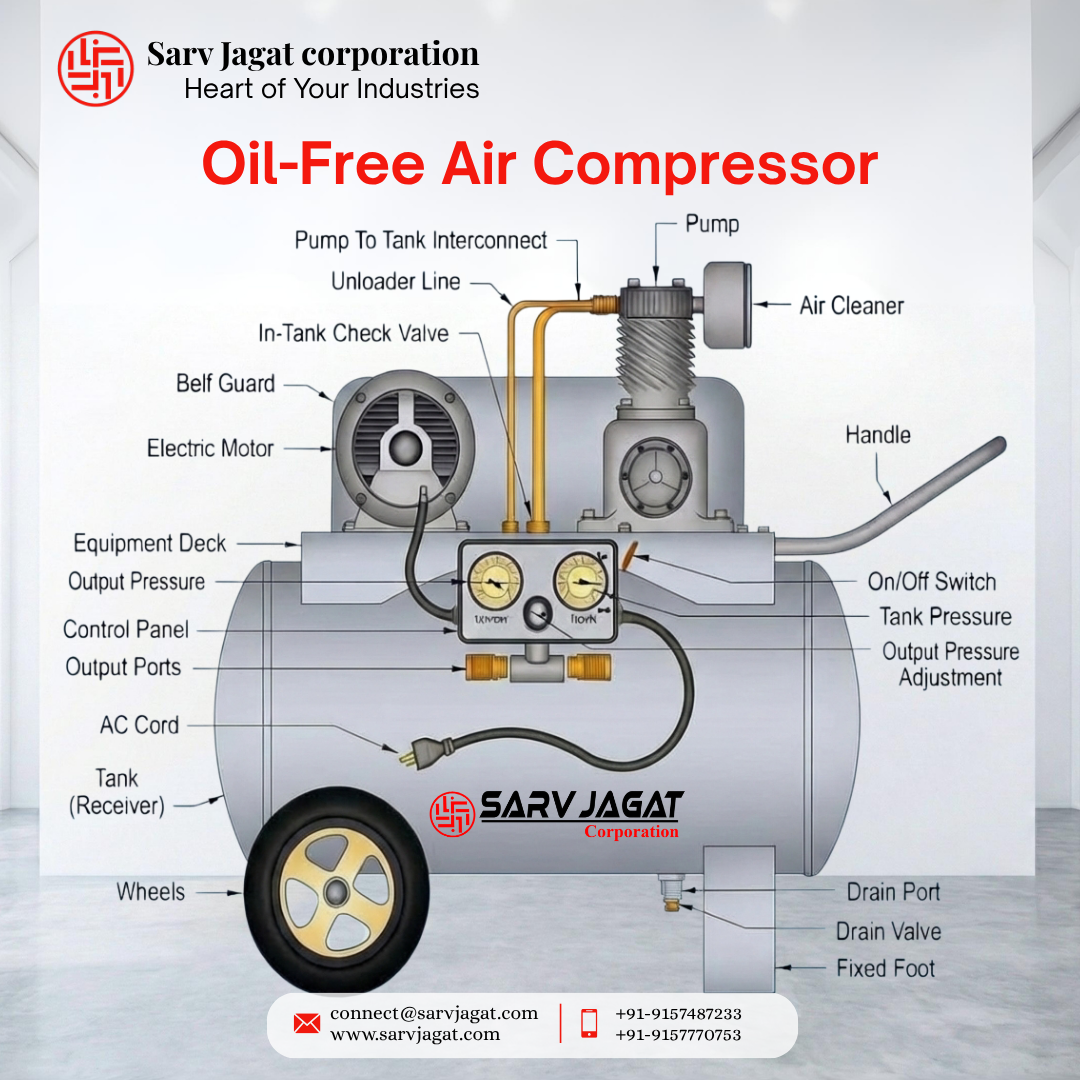
Oil-Free Air Compressor Components | Working & Applications
Discover the key components of an oil-free air compressor, including the motor, compression pump, air cleaner, check valve, pressure controls, receiver tank, and drain valve. Learn how these components support clean compressed air delivery for suitable medical, laboratory, pharmaceutical, electronics, and industrial applications.
| Read Time | 5 min read |
| Status | published |
| Tags | Oil-Free Air Compressor, Oil-Free Air Compressor Components, Oil-Free Compressor Working, Air Compressor Parts, Compressed Air System, Electric Compressor Motor, Compressor Pump, Air Intake Filter, Compressor Check Valve, Unloader Line, Pressure Gauge, Air Receiver Tank, Compressor Drain Valve, Clean Compressed Air, Medical Air Systems, Laboratory Air Compressor, Pharmaceutical Industry, Electronics Manufacturing, Industrial Air Compressor, Air Compressor Maintenance, Compressed Air Solutions, Sarv Jagat Corporation, Ahmedabad Gujarat |
Project Gallery & MediaSupplied Machinery & Installations
Article Overview & Specifications
Understanding Oil-Free Air Compressor Components
Most people use an air compressor without understanding what makes it work reliably. An oil-free air compressor is an engineered system in which each component contributes to air compression, pressure control, and reliable operation.
Unlike oil-lubricated compression designs, an oil-free compressor is designed to prevent lubricating oil from entering the compression chamber. However, the actual air quality depends on the compressor design, intake conditions, and the complete compressed air system.
Key Components of an Oil-Free Air Compressor
1. Electric Motor
The electric motor supplies the mechanical power required to operate the compressor pump and generate compressed air.
2. Compression Pump
The pump draws in atmospheric air and compresses it to the required pressure. Its design determines important operating characteristics, including airflow capacity and compression performance.
3. Air Cleaner or Intake Filter
The intake filter helps prevent dust and airborne particles from entering the compression system, protecting internal components and supporting reliable operation.
4. Check Valve and Unloader Line
The check valve helps prevent compressed air from flowing backwards from the receiver tank. The unloader mechanism releases trapped pressure where required by the compressor design, supporting appropriate starting and stopping operation.
5. Pressure Gauge and Control System
The pressure gauge displays system pressure, while the pressure switch or control panel helps regulate compressor operation according to the system's control settings.
6. Air Receiver Tank
The receiver tank stores compressed air, helps accommodate short-term fluctuations in demand, and reduces frequent compressor cycling in suitable systems.
7. Drain Valve
Moisture can accumulate inside the receiver tank as compressed air cools. The drain valve removes collected condensate and helps protect the tank and downstream equipment from moisture-related problems.
Where Are Oil-Free Air Compressors Used?
Oil-free air compressors are selected for applications where reducing the risk of oil contamination is important, including:
• Medical and healthcare facilities, where the system must meet applicable medical-air requirements.
• Laboratories and research environments.
• Pharmaceutical and cosmetics manufacturing.
• Electronics assembly and precision operations.
• Small workshops, service centers, and suitable industrial applications.
Important: An oil-free compressor does not automatically guarantee sterile, dry, or contaminant-free air. Applications with strict air-quality requirements may need additional filtration, drying, monitoring, and validation to meet the applicable standards.
Oil-Free Air Compressor Solutions by Sarv Jagat Corporation
At Sarv Jagat Corporation, we provide compressed air solutions designed around equipment requirements, operational reliability, and application needs. Choosing the right compressor involves evaluating the required airflow, working pressure, duty cycle, air quality, and operating environment.
Understanding each component helps businesses make informed equipment decisions, support preventive maintenance, and maintain dependable compressed air performance.
📍 Location: Ahmedabad, Gujarat, India
📞 Contact: +91 9157487233 | +91 9157770753